
Distribution and protection

Fuses on board.Which type goes where?.

A fuse protects the cable, not the device. Which type fits depends on two things: the rated current set by the cross-section, and the breaking capacity required at the installation point. Directly at the battery, and especially at a lithium battery, only a few types are suitable.

Fuses on board: Which type goes where?
  • 20 kAClass T breaking capacity for lithium
  • 17.8 cmmaximum unprotected from the positive terminal
  • 6 typesfrom 3 A to 600 A

The fuse types at a glance

TypeTypical rangeBreaking capacityWhere
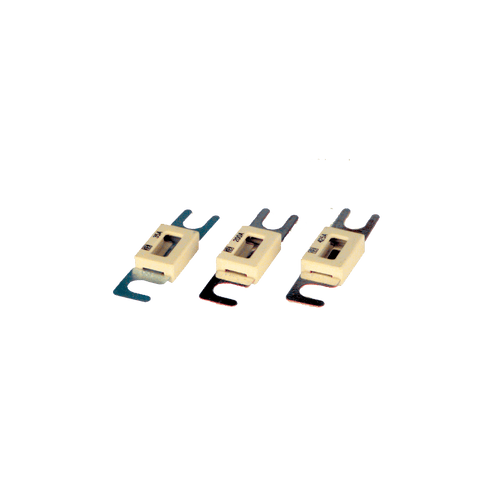
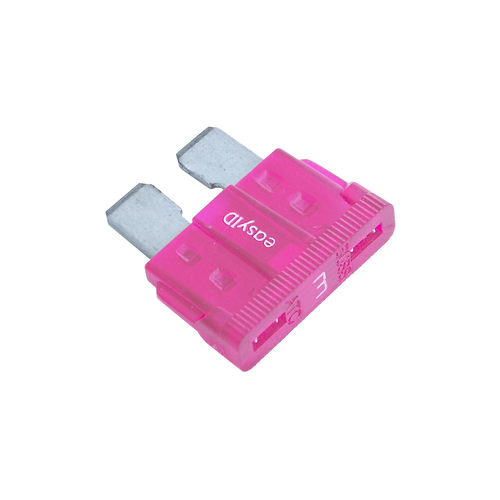
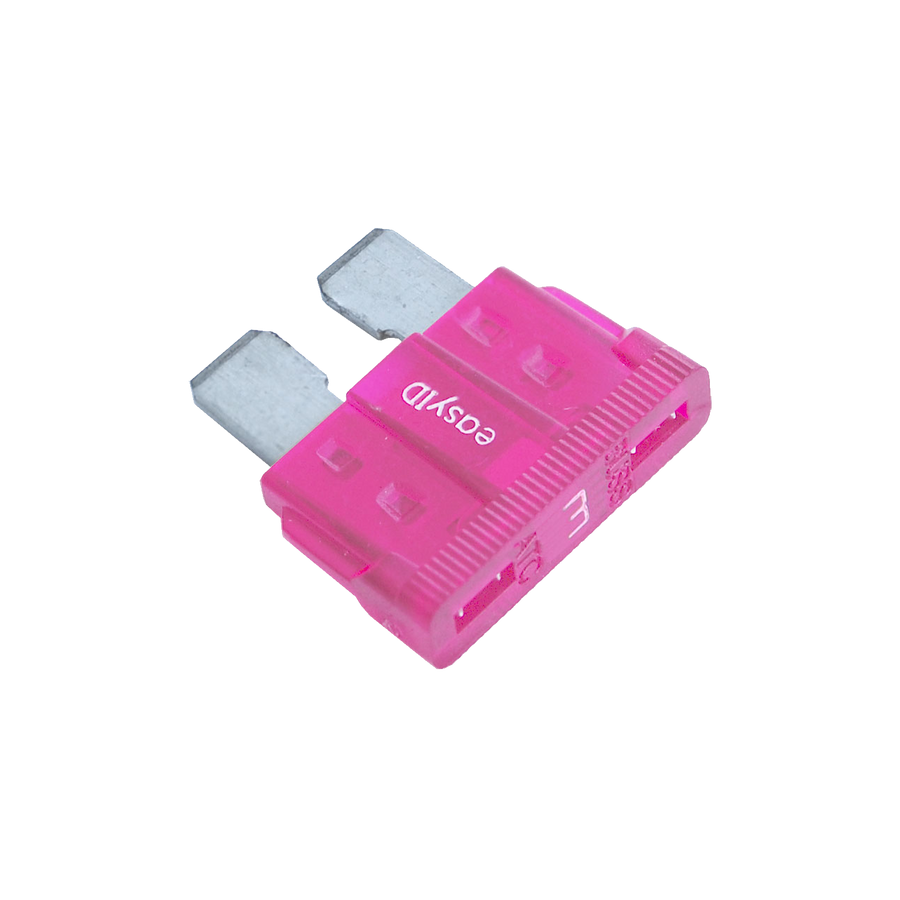
Blade fuse (automotive, FSL)3 to 25 Aapprox. 1 kAafter a distribution or switch panel, individual consumers
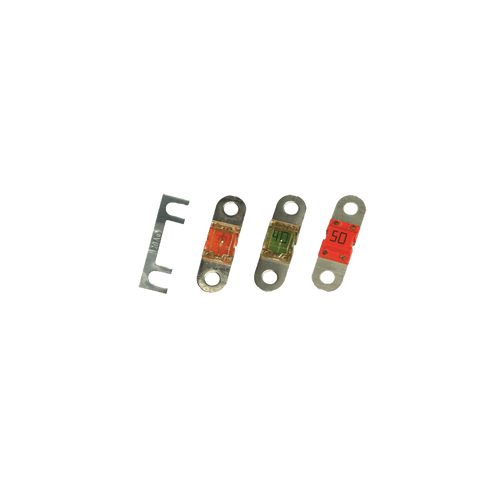
MIDI strip fuse (STM)medium currentsee data sheetchargers, boosters, sub-distributions
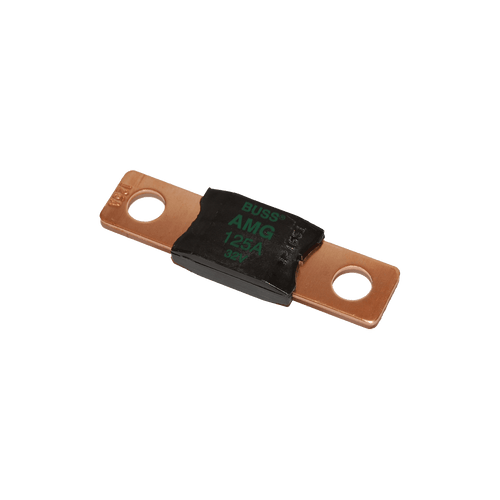
MEGA fuse (FSM)high currentat least 2 kAinverters, main cables with lead-acid, AGM, gel
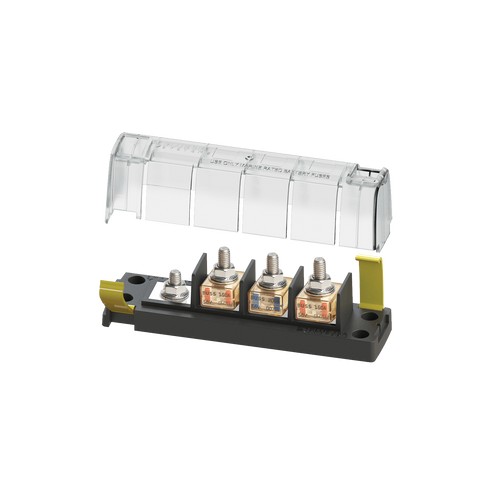
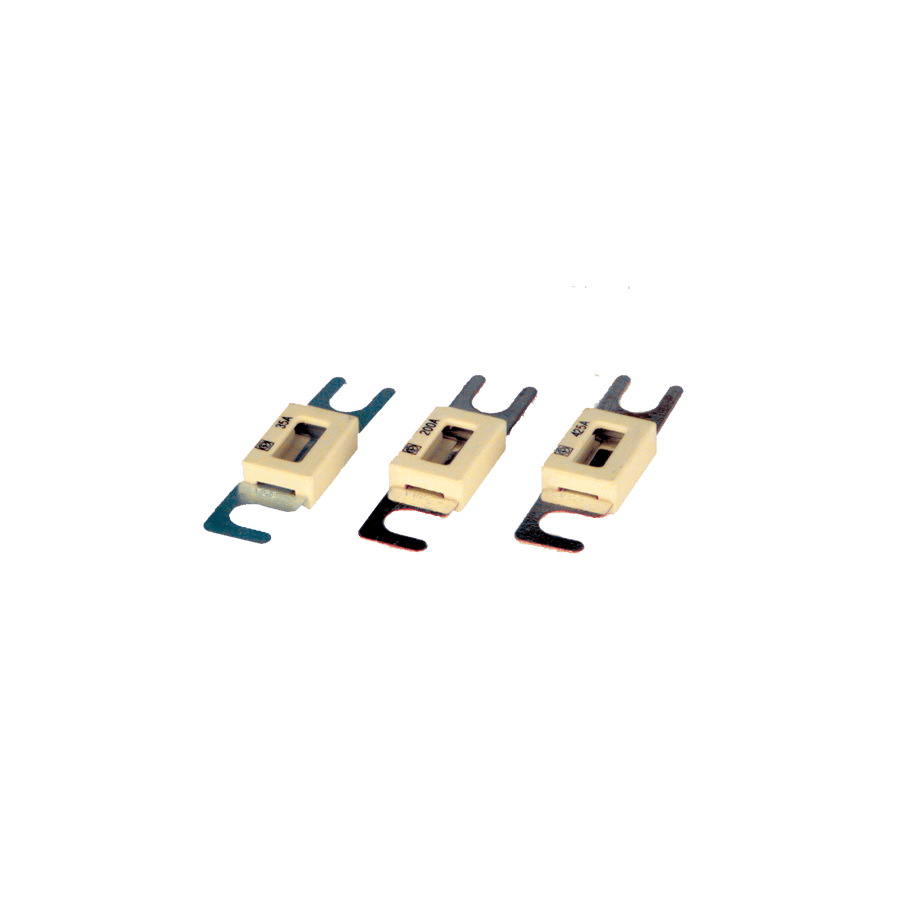
Strip fuse (STS, ANL)high current, holders up to 750 Aat least 2 kAmain fuse with lead-acid, AGM, gel
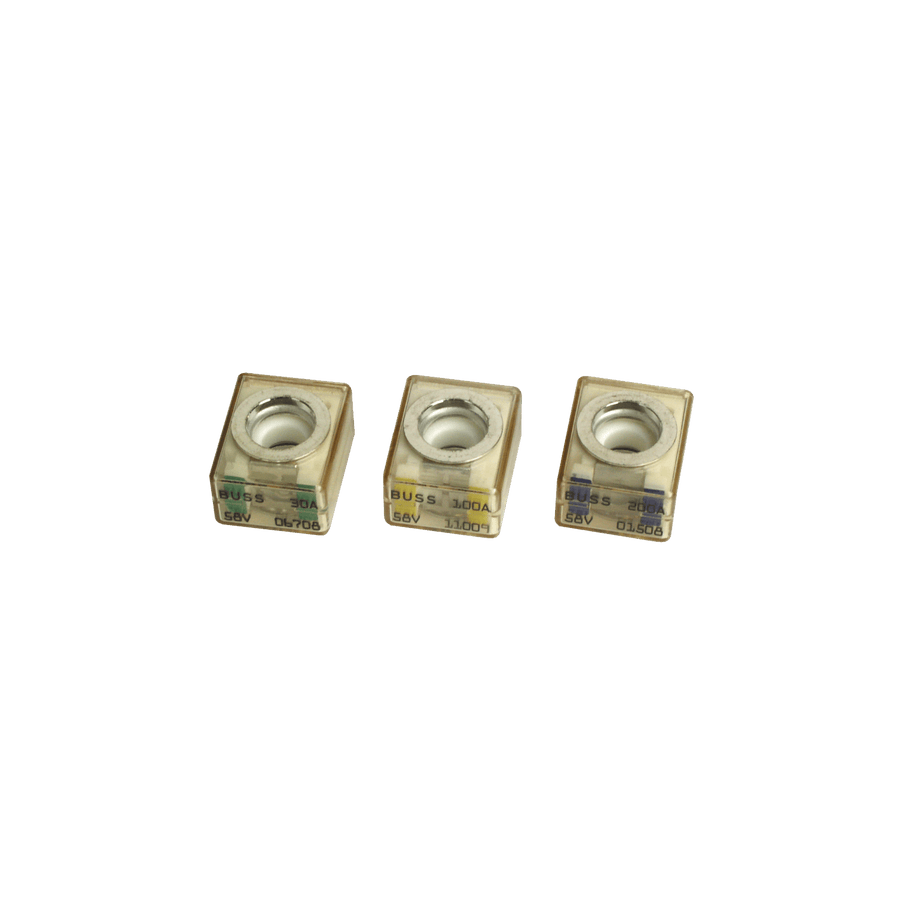
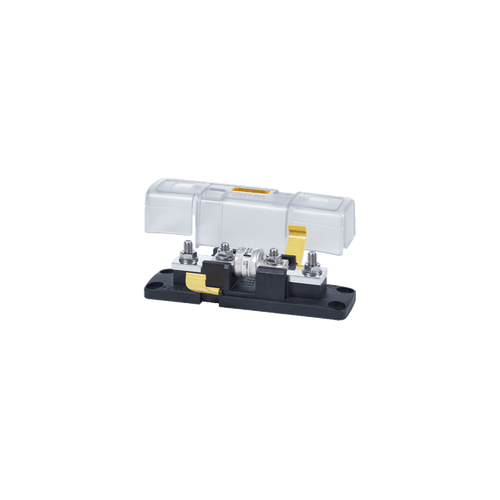
SHB bolt-down fuse (MRBF)30 to 300 A10 kAdirectly at the battery terminal, also with lithium
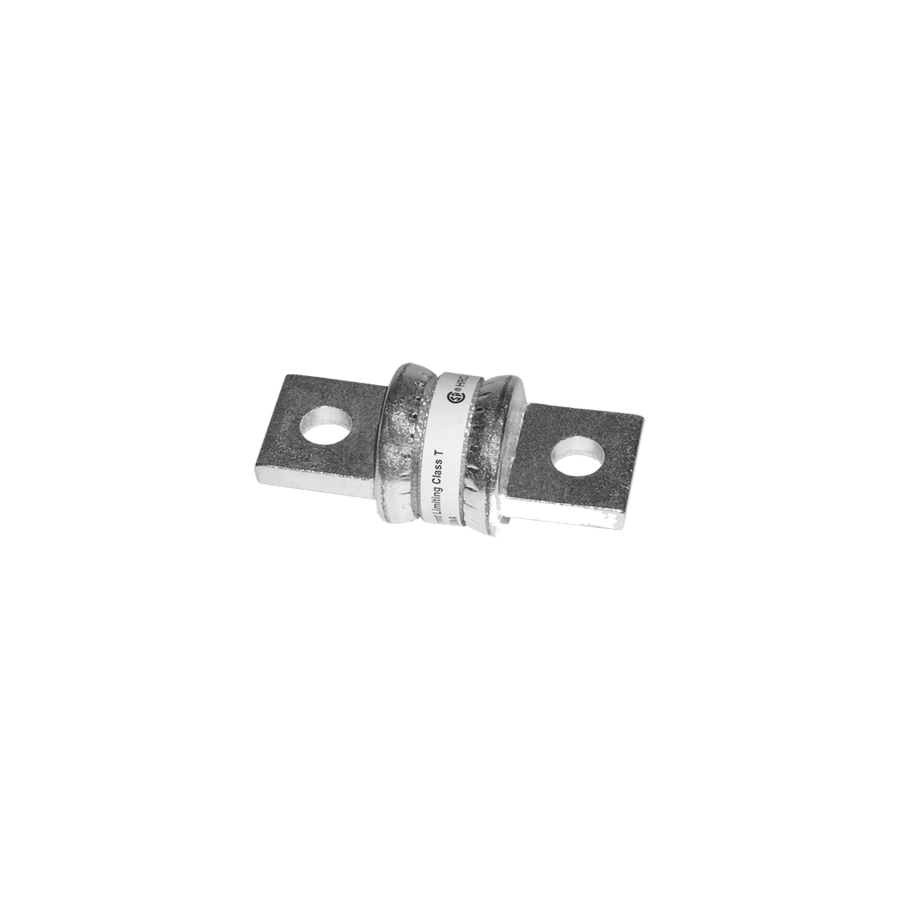
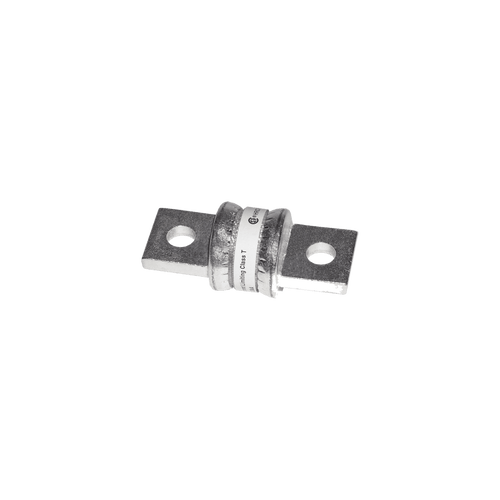
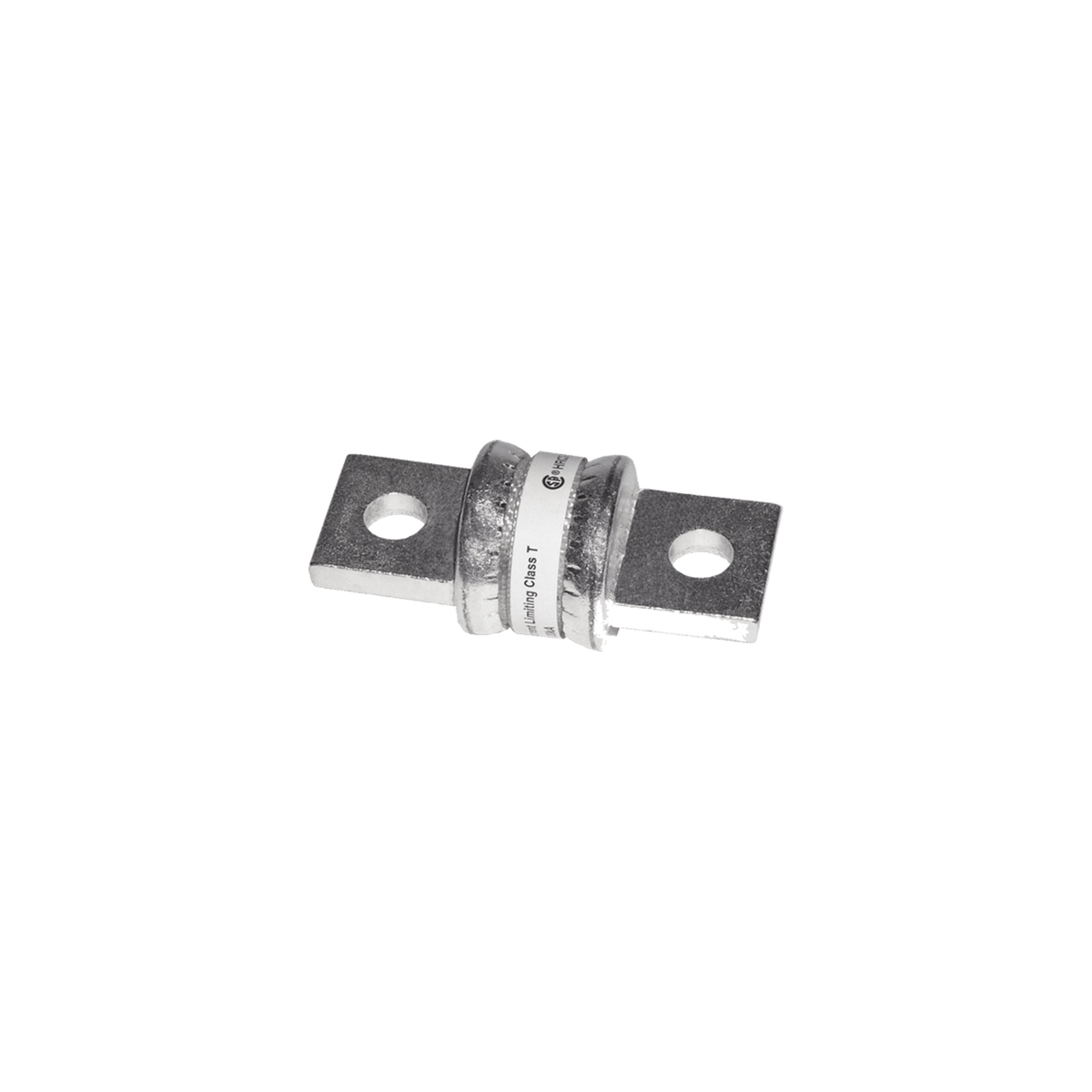
Class T110 to 600 A20 kA at 125 V DCmain fuse for large lithium banks

The breaking-capacity values are the same ones the cable configurator uses to check whether a fuse type may be installed at a given point.
Cross-section first, then the fuse

The rated current of the fuse always lies between two limits: above the continuous current of the consumer, so that it does not trip in operation, and below the current-carrying capacity of the cable, so that the cable does not fail before the fuse. If you lay a thicker cable for voltage-drop reasons, you still must not choose a larger fuse than the consumer requires.

The cable configurator calculates both in one step: cross-section by voltage drop and current-carrying capacity, plus rated current, fuse type and holder.

Cross-section first, then the fuse

Breaking capacity: what the fuse can interrupt

In a short circuit, a battery delivers many times its normal current. A fuse must not only detect this current but interrupt it safely. If it cannot, it continues to burn as an arc. That is why the blade fuse, at around 1 kA, does not belong at the battery terminal but after a distribution that already limits the short-circuit current.

At the terminal of a lead-acid, AGM or gel battery, types rated at 2 kA or more are required: strip, MEGA and bolt-down fuses.

Breaking capacity: what the fuse can interrupt

Lithium batteries: only SHB or Class T at the terminal

Lithium banks have a very low internal resistance and deliver much higher short-circuit currents than lead-acid batteries. At the terminal of a lithium battery, only the SHB bolt-down fuse with 10 kA and the Class T fuse with 20 kA are therefore permitted. Class T starts at 110 A; below that, the SHB directly at the terminal is the choice.

  • Example inverter: 150 A, 3 m from a lithium battery, 12 V and a maximum voltage drop of 3 % result in 50 mm² and a Class T fuse directly at the terminal.
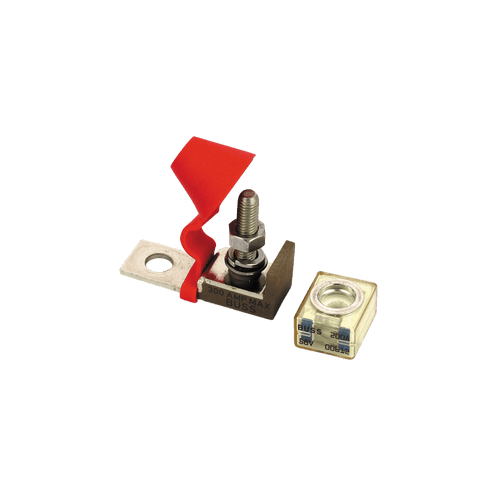
  • Example charge booster: at smaller currents, the SHB sits on the ABH holder directly on the positive terminal, without a cable section in front of it.
Lithium batteries: only SHB or Class T at the terminal

Where the fuse goes

The main fuse belongs as close as possible to the positive terminal, because the cable section in front of it is unprotected in a short circuit. ABYC E-11 sets 7 inches, i.e. 17.8 cm, as the limit. The cable configurator allows a maximum of 20 cm and warns from 17.8 cm. The simplest solution is the SHB bolt-down fuse on the ABH 1 holder directly at the terminal.

Consumers behind the main fuse are fused individually at the switch panel or in a fuse distribution, each according to its cross-section.

Where the fuse goes

Frequently asked questions.Short answers.

Which fuse belongs directly at the battery?

The terminal needs a type with a high breaking capacity: with lead-acid, AGM and gel, strip, MEGA or bolt-down fuses from 2 kA; with lithium, only the SHB bolt-down fuse with 10 kA or Class T with 20 kA. Blade fuses manage around 1 kA and belong after a distribution.

What determines the size of the fuse?

The cable cross-section: the rated current lies above the continuous current of the consumer and below the current-carrying capacity of the cable. The fuse protects the cable; the device protects itself.

What is the difference between SHB and Class T?

Both are permitted at a lithium terminal. The SHB bolt-down fuse interrupts 10 kA and covers 30 to 300 A; it sits compactly on the ABH holder directly on the terminal. Class T interrupts 20 kA at 125 V DC, starts at 110 A and is the main fuse for large lithium banks and inverters.

Fuse or circuit breaker?

A circuit breaker can be reset after tripping and can also serve as a switch. Fuses are cheaper and more compact, but must be replaced after tripping. Spare fuses therefore belong on board.

Questions about your system?We plan it with you.

Tell us about your boat or vehicle and we will suggest the right components.

Book a consultation