Camper and motorhome

Motorhome power distribution.Charging, distributing, protecting.

In a motorhome, three energy sources feed one leisure battery: the alternator, shore power and often solar. From there, a switch panel distributes power to the consumers. For this to work reliably and safely, every cable needs the right cross-section and its own fuse, with the main fuse no more than 17.8 cm from the positive terminal.

Motorhome power distribution: charging, distributing, protecting
  • 12 and 24 Vmotorhome systems
  • 17.8 cmmaximum to the main fuse
  • 3 %voltage drop for key circuits

The building blocks at a glance

ComponentTaskAt philippi
Leisure batterysupplies the living area, separate from the starter batteryBullTron and Super B lithium batteries
Charge boostercharges the leisure battery from the alternator while drivingDCB charge boosters 12 V and 24 V
Battery isolator relayconnects starter and leisure battery while the alternator chargesACR 12/24 isolator relay
Chargercharges on shore powerACE battery chargers
Switch paneldistributes and protects the consumer circuitsSTV 200 vehicle switch panels
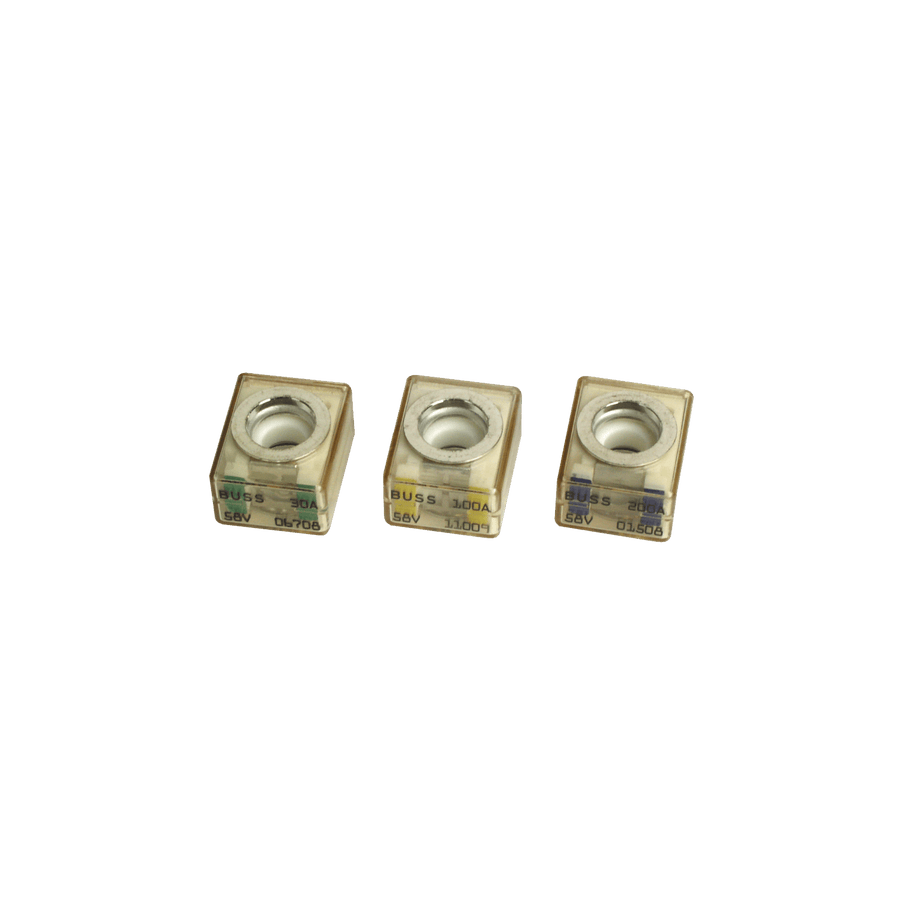
Main fuseprotects the cable from the positive terminalSHB bolt-down fuse, Class T

Charging while driving: charge booster or isolator relay

An isolator relay connects starter and leisure battery in parallel as soon as the alternator charges. It is simple, but only passes on what the alternator delivers. Modern vehicles regulate the alternator voltage variably, so the leisure battery often receives too little. A charge booster charges the leisure battery with its own charging profile and the right voltage, including for lithium batteries.

The cable to the charge booster carries high current over several metres. The cable configurator calculates its cross-section and the fuses at both ends.

Charging while driving: charge booster or isolator relay

Distributing: switch panel instead of a fuse box

A switch panel combines switches, fuses and displays in one place. Every consumer circuit gets its own fuse matching its cross-section, with fridge and heating separate from lighting and sockets. The 200 series vehicle switch panels are available in several versions.

Distributing: switch panel instead of a fuse box

Protecting: the rules from boat building

Motorhomes have no dedicated standard like ISO 13297 for boats. Its principles transfer directly, though:

  • Main fuse: no more than 17.8 cm from the positive terminal, ideally directly on the terminal.
  • Lithium batteries: at the terminal only the SHB bolt-down fuse or Class T, because of the very high short-circuit currents.
  • Every cable: fused according to its cross-section, not the device.
  • Voltage drop: no more than 3 percent for fridge, chargers, boosters, inverters and heating.

All fuse types and their breaking capacity: Fuses at a glance.

Protecting: the rules from boat building

Frequently asked questions.Short answers.

Do I need a charge booster in my motorhome?

With modern vehicles with a variably regulated alternator, usually yes, and with lithium leisure batteries almost always. An isolator relay only passes on the alternator voltage; the charge booster charges with its own profile matched to the battery.

How do I fuse the leisure battery?

With a main fuse no more than 17.8 cm from the positive terminal, ideally directly on it. With lithium only with an SHB bolt-down fuse or Class T. The rated current depends on the cross-section of the main cable.

What cable cross-section do I need for the charge booster?

That depends on current and length, as the outgoing and return cables both count. At 12 V and 3 percent voltage drop, 16 to 35 mm² quickly add up over several metres. The cable configurator calculates the exact value for your booster.

Do I need a battery main switch?

It is strongly recommended: it isolates the leisure battery during lay-up and for work on the system. It does not replace a fuse, though; both belong together.

Questions about your system?We plan it with you.

Tell us about your boat or vehicle and we will suggest the right components.

Book a consultation